 |
History |
 |
About the Pardee Home
Oakland's Pardee Home is
one of the greatest architectural and historical treasures of Northern
California. First-time visitors might initially be attracted by the exterior
beauty of the house and its gardens, but after entering the house they
learn of its outstanding historical importance and of its unique interiors
and artifacts from throughout the world
 The Pardee Home, including
its carriage house and water tower, is a centerpiece of Oakland's Preservation
Park Historic District, within a short walking distance of such downtown
landmarks as Old Oakland, City Hall, and Preservation Park. Once threatened
by the construction of Interstate 980, the successful effort to save the
house in the 1970s was an important early chapter in the historic preservation
movement in Oakland. It was designated a city landmark in 1975, was
listed on the National Register of Historic Places in 1976, and was named
a California state landmark in 1997. The Pardee Home, including
its carriage house and water tower, is a centerpiece of Oakland's Preservation
Park Historic District, within a short walking distance of such downtown
landmarks as Old Oakland, City Hall, and Preservation Park. Once threatened
by the construction of Interstate 980, the successful effort to save the
house in the 1970s was an important early chapter in the historic preservation
movement in Oakland. It was designated a city landmark in 1975, was
listed on the National Register of Historic Places in 1976, and was named
a California state landmark in 1997.
The house was built in 1868-69
by Enoch Pardee, a Gold Rush immigrant to California from the Midwest,
who became an eye doctor in San Francisco after mining gold. He also pursued
a vigorous public career in the East Bay during the 1870s and 1880s, including
mayor of Oakland, state assemblyman, and state senator.
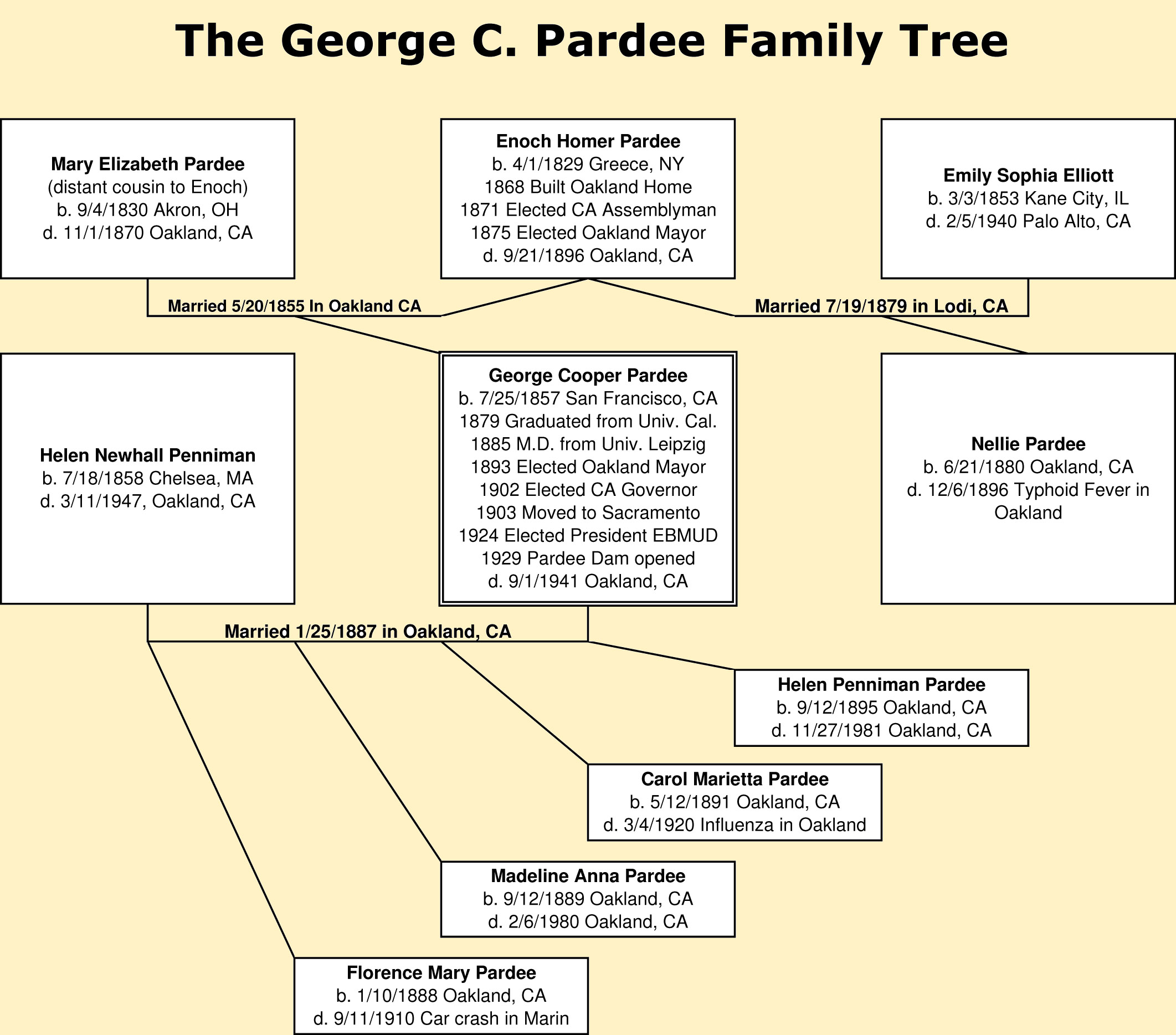
Enoch's only child by his first wife Mary, George C. Pardee, followed ever
so closely in his father's footsteps, also becoming an eye doctor in San
Francisco and mayor of Oakland. Unlike his father, George did not serve
in the state legislature in Sacramento; however, he was elected governor
of California in 1902.
| 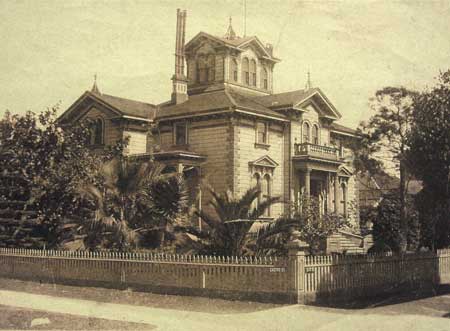
The Pardee Home circa 1900 |
|
Governor Pardee is best
remembered today as the "earthquake governor," who received universal praise
in 1906 for his remarkable leadership during the worst tragedy in California
history. But his public career extended much beyond this one crisis. With
Theodore Roosevelt as his close political mentor, George was a co-founder
of the Progressive Party in California and was one
of the most important early conservationists in the nation. He also played
a key role in wresting control of the Oakland waterfront from the Southern
Pacific Railroad and returning it to the citizens of the city, an accomplishment
rewarded when he was elected a founding commissioner of the Port of Oakland
in 1927. Late in life George was the founder and longtime President of
the local water utility, EBMUD, which honored him with the naming of the
Pardee Dam, still the dominant source of water for this region. |
|
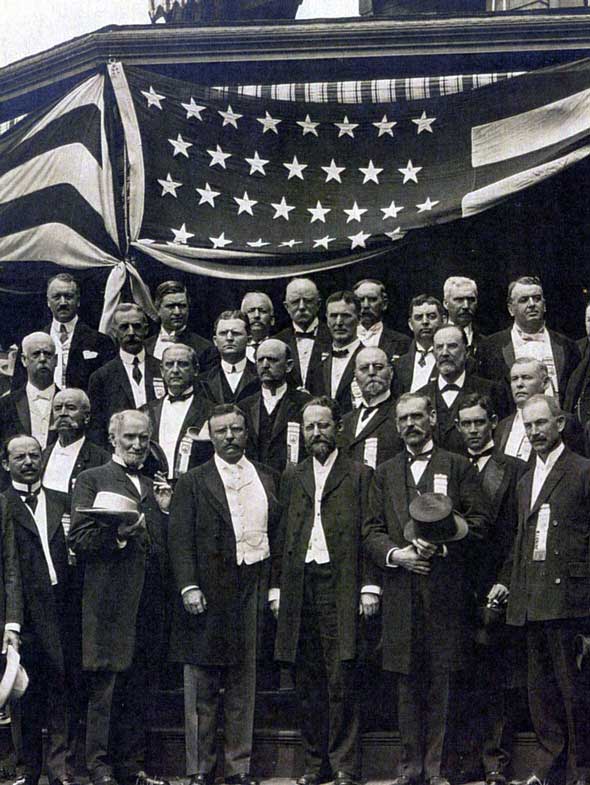
Governor Pardee stands to the right of President Theodore Roosevelt as Roosevelt accepts the Republican nomination for the presidency in 1904
|
George's wife, Helen, was
one of the most prodigious private collectors in California. She accumulated
many thousands of objects from all corners of the world... scrimshaw from
Alaska, tobacco pipes from the Philippines, altarpieces from China, and
rosaries from Mexico, to name but a few. In 1897, when George and Helen
moved their young family into this house after Enoch's death, Mrs. Pardee
began creating a private house museum, with exhibits of her scores of collections
eventually dominating most of the public rooms. Mrs. Pardee's artifacts
from the nations of the Pacific Rim, along with the museum's notable collection
of California fine arts, set this house apart from similar homes in other
regions of the country. Helen was a renowned hostess and loved to give
house tours with an emphasis on her collections, often followed by a cup of tea
...a tradition that lives on today.
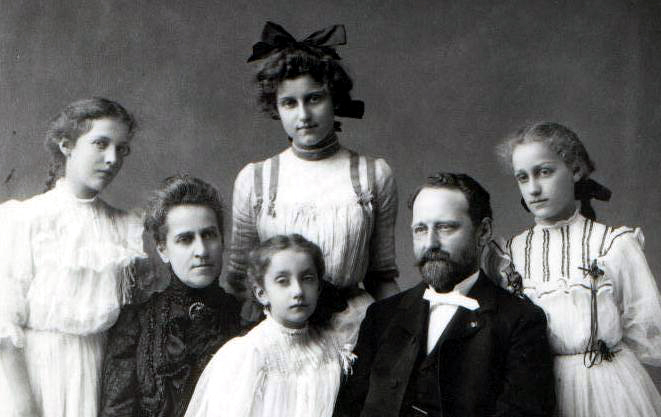 |
Governor and Mrs. Pardee
lost two of their four daughters at early ages, but the two surviving daughters,
Madeline and Helen, lived in this house as single women for many years
after their parents' deaths in the 1940s. The Pardee Home Foundation was
established following Helen's death in 1981 with the goal of preserving
their lovely home and its contents as a public museum. The house is shown
today just as it evolved over the years, and as such represents a unique
historic site, illustrating over a century of the Pardees' lives as well
as the larger history of their city, region, and state. |
Left to right (front), Miss Madeline, Mrs. Helen,
Miss Helen, Governor Pardee, and Miss Carol;
Miss Florence in the rear, 1902.
|
|